poetsandnurses
Poets, Nurses, and Programmers
What We Must Build in the Next Nine Months
January 2026
I. Outrage Alone Is Not Effective
Renée Good was a thirty-seven-year-old American citizen, a poet and mother of three, driving in her Minneapolis neighborhood on January 7, 2026, when an ICE agent shot her dead. Less than three weeks later, on January 24, Alex Pretti, also thirty-seven, an ICU nurse at the VA hospital who had dedicated his life to caring for veterans, was pepper-sprayed, wrestled to the ground by six federal agents, and killed while holding his cell phone aloft. Video evidence contradicts every element of the Department of Homeland Security’s account. These were American citizens, killed by American law enforcement officers, in an American city that had explicitly asked these officers to leave.
The outrage is real. Tens of thousands marched through Minneapolis in sub-zero temperatures the day before Pretti’s death. Senators are demanding answers. Governor Walz has called the federal government’s account “nonsense… and lies”. The state has filed lawsuits to halt the federal operation and to preserve evidence in the killings. But here is the truth we must confront: outrage alone is not effective. There is a gap, a vast and terrible gap, between what we feel and what we can achieve through normal political channels.

Consider the Senate Democrats who are voting against ICE funding this week. What leverage do they actually possess? To restrain ICE through appropriations, they must pass a budget. But passing a budget means providing the executive branch with funds to operate, including the very agencies they wish to restrain. And if they refuse to pass it? The government shuts down, but ICE continues anyway, drawing on $170 billion in pre-positioned funding that Republicans passed last year. As Senator Patty Murray grimly noted: “The suggestion that a shutdown in this moment might curb the lawlessness of this administration is not rooted in reality.”
This is the paradox of democratic opposition to an autocratic executive: major levers of power have been anticipated and neutralized. The courts issue injunctions; they are ignored or circumvented. Congress passes restrictions; they are flouted or worked around. State officials assert jurisdiction; federal agents operate without coordination.
In a democracy, we expect to turn to the government to respond to our grievances. But the parts of government that respond to the people are being systematically dismantled. Military leadership has been purged of officers who might refuse illegal orders. Inspectors general across agencies have been fired. Whistleblower protections have been gutted. Government lawyers who raised legal objections have been removed. The president was impeached twice before and emerged unscathed. The Supreme Court has been remade in his image.
To be clear: defending constitutional democracy is not about defending one party. Democratic institutions have their own failures, and both parties have contributed to their erosion. But the specific threat now is to the mechanisms of accountability themselves, the processes by which any government can be checked and power transferred. That is what we must defend.
Many people look at this situation and see no path forward. They assume that if Congress cannot restrain the executive, if courts are ignored, if norms no longer bind, then nothing can be done. This assumption is understandable but wrong.
The research on how authoritarian consolidation is prevented points to a different mechanism entirely: defection. Autocracies depend on thousands of people carrying out orders: bureaucrats, judges, prosecutors, military officers, police, business leaders. When enough of these people refuse to comply, the machinery of authoritarianism seizes. The goal of organized action is not to appeal to the conscience of the powerful. It is to raise the costs of compliance until defection becomes the rational choice.
II. How Autocracies Are Stopped
Political scientist Erica Chenoweth, working with Maria Stephan, analyzed every major campaign for regime change from 1900 to 2006: 323 campaigns in total, both violent and nonviolent. Their findings, published in Why Civil Resistance Works, upend conventional assumptions about power.
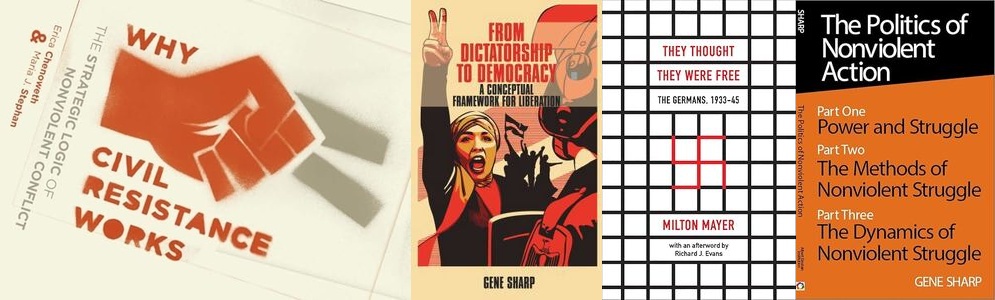
Nonviolent campaigns succeeded 53% of the time. Violent campaigns succeeded 26% of the time. Nonviolent movements attracted four times as many participants on average. Countries that underwent nonviolent transitions were ten times more likely to establish lasting democracies. And most strikingly: no government in their dataset withstood a sustained challenge from 3.5% of its population.
Why does nonviolent resistance work? The mechanism is not moral appeal. It is not that oppressors are shamed into relenting. The mechanism is strategic: nonviolent movements are better at attracting broad participation, and broad participation is what triggers the defections that bring regimes down.
This is the core insight of Gene Sharp, the political scientist who founded the Albert Einstein Institution and spent six decades studying how dictatorships fall. Sharp’s 1973 work The Politics of Nonviolent Action catalogued 198 methods of nonviolent resistance; his 1993 handbook From Dictatorship to Democracy has been translated into more than 30 languages and used by democracy movements from Serbia to Egypt. The New York Times called him “the Clausewitz of nonviolent warfare.”
Sharp’s key concept is the pillars of support: every regime rests on institutions that can be destabilized. The military, the judiciary, the civil service, business elites, religious institutions, the media. These are not monolithic. They are made of people who can, under the right conditions, withdraw cooperation. Sharp wrote: “Dictatorships are never as strong as they think they are, and people are never as weak as they think they are.” When enough pillars crack, the regime dies from what Sharp called “political starvation.”
Chenoweth’s research identifies four elements that make nonviolent movements effective: large and diverse participation that is sustained over time; loyalty shifts among security forces and elites; tactical flexibility that keeps the regime off-balance; and discipline that maintains nonviolent commitment even under repression. Violence narrows participation and unifies the regime’s supporters. Nonviolence broadens the coalition and divides the regime’s base.
Chenoweth cautions that 3.5% is a rule of thumb, not an iron law, and that since 2010, both nonviolent and armed resistance have become less effective as authoritarian regimes learn from history and coordinate with one another. But the fundamental insight holds: what stops autocracies is not appeals to conscience or reliance on normal institutions. What stops them is organized collective action that imposes costs too high to bear.
In America, 3.5% means roughly 11 million people in sustained engagement. This is not 11 million people attending a single march. It is 11 million people maintaining continuous, organized pressure over months. The Women’s March in January 2017 brought out 4 to 5 million on a single day, and then most went home. We must do better. We must build infrastructure that sustains pressure long enough to trigger the defections that matter.
III. The 2026 Midterms: The Decisive Moment
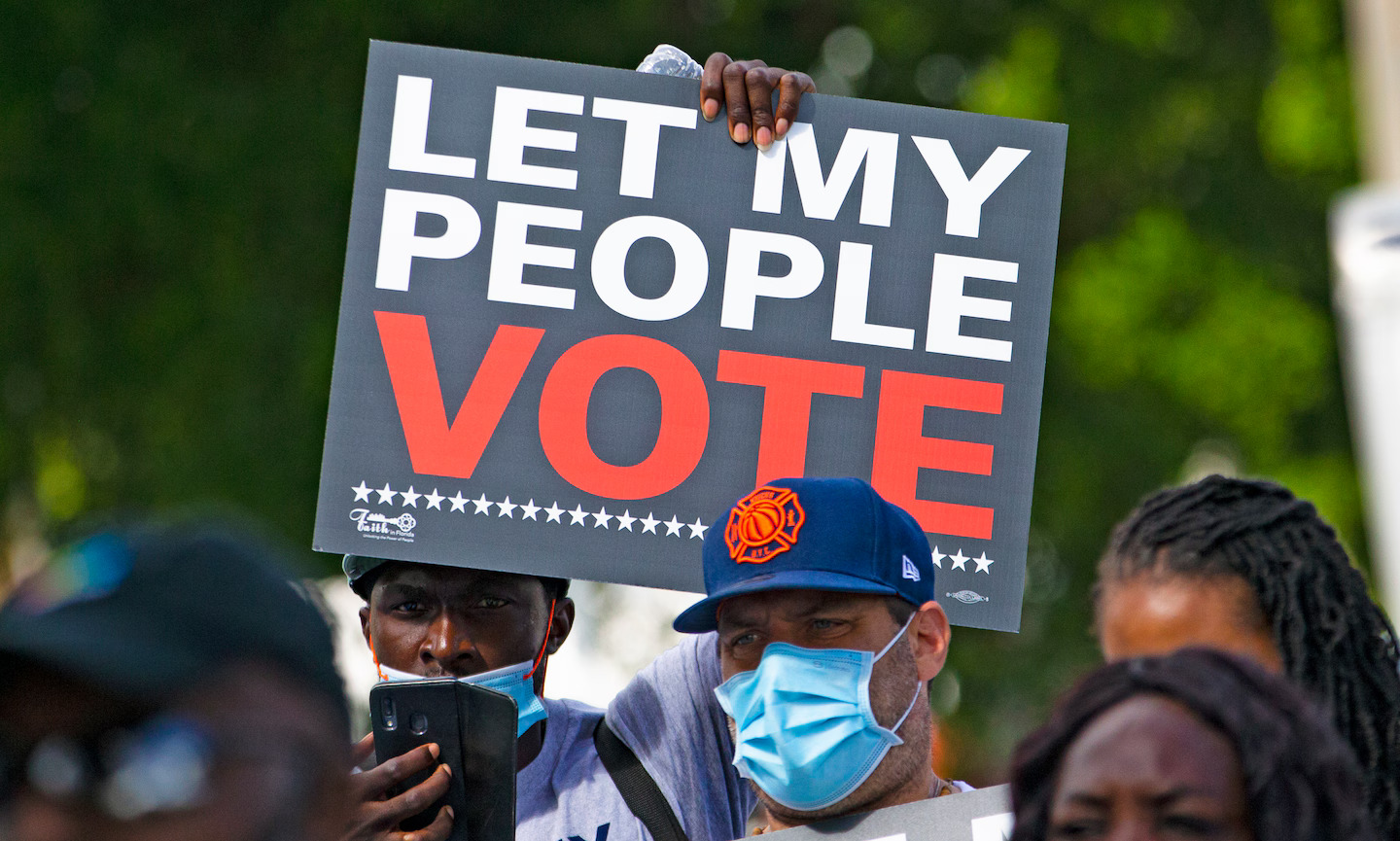
The 2026 midterm elections are the decisive moment for American democracy. Trump has identified them as such. At a House Republican retreat on January 6, 2026, he warned: “You got to win the midterms, because if we don’t win the midterms… they’ll find a reason to impeach me. I’ll get impeached.” He understands that an opposition Congress would have subpoena power, the ability to investigate, and the capacity to restrain executive action.
This is not a new concern. Since the Heritage Foundation began drafting Project 2025, the conservative policy blueprint for Trump’s second term, election interference has been central to the strategy. The Brennan Center documented how Project 2025 proposed using the Justice Department to prosecute election officials who make decisions the administration dislikes, gutting CISA’s election security support, and weaponizing federal power against those who resist election subversion. The administration is now executing that playbook.
Election security matters, and transparent counting with bipartisan observers strengthens democracy. What the Brennan Center documents is different: actions that dismantle the infrastructure protecting elections, not measures that strengthen it. The Brennan Center for Justice has documented what they call “an unprecedented campaign to undermine American elections.” The actions already underway include: gutting election security infrastructure, with much of CISA’s election security staff laid off or put on administrative leave and funding cut to information-sharing partnerships; installing election deniers in key positions, including a deputy assistant secretary for elections integrity who worked alongside Cleta Mitchell to spread conspiracy theories; creating federal task forces targeting voters and officials, including the DOJ’s Weaponization Working Group; demanding voter data from states, with the DOJ suing 22 states and the District of Columbia after they refused to turn over voter information; driving out experienced election officials, with 59% now reporting fear of political interference in their ability to do their jobs; and targeting mail-in voting, with executive orders and new postal guidance raising concerns about whether mail ballots will be counted.
Election officials are gaming out what comes next: federal troops or agents at polling places, which Steve Bannon has openly advocated for and the administration has not ruled out; emergency declarations, with Cleta Mitchell indicating Trump could declare a national emergency based on “election integrity” and exercise emergency powers over federal elections; seizing voting machines, with DHS intermediaries already seeking access to voting equipment in Colorado and Missouri; and post-election certification interference, using federal pressure on state officials to refuse certification of results.
And we should be clear-eyed about what comes after certification. The administration is consolidating police and military control over Washington, D.C. Given the militarization of ICE, the willingness to shoot American citizens in the streets, and the pattern of ignoring court orders, we should take it as a given that the administration will physically interfere with the seating of the 2027 Congress if the election results threaten its power. This could mean flying in losing candidates to claim seats, preventing winners from entering the city or the Capitol, or jailing elected officials on spurious charges of election fraud. These steps would be mild compared to what we have already witnessed in Minneapolis. The confrontation does not end on Election Day. It extends through certification, through the lame duck period, and through the moment when a new Congress attempts to take the oath of office.
The dissolution of midterm results is the Rubicon we must not cross. If the administration successfully interferes with the election and faces no consequences, or if it loses but refuses to accept the results, the constitutional order is over. We will not vote our way out of what follows.
Protection of the midterms must be our highest priority. Everything else, every other issue, is secondary to preserving the mechanism by which power can be transferred and accountability restored. And protecting the election creates the conditions for defection: officials who see a path to accountability are more likely to refuse illegal orders. Judges, prosecutors, and military officers who believe they may face consequences are more likely to say no.
IV. Three Points of Leverage
Given this analysis, three sources of leverage emerge. Each is a way to trigger the defections that stop autocracies. State governmental capacity means state officials refusing to cooperate with federal interference. Mass mobilization creates cover for those who want to defect but fear isolation. Economic leverage solves the coordination problem that prevents business defection.
1. State Governmental Capacity
States retain constitutional authority over elections. Governors command state law enforcement and National Guards. State attorneys general can litigate. Secretaries of state certify results. If state officials refuse to cooperate with federal interference in elections, and if that refusal is coordinated across states and backed by the credible threat of using state power to respond, the administration faces a choice: accept electoral defeat, or use military force against American states.
This is not hypothetical. Governor Walz is currently in direct confrontation with the federal government over Minneapolis. The question is whether this confrontation can be sustained and expanded. The infrastructure needed includes: governors and secretaries of state who commit publicly to opposing federal interference; coordination mechanisms between states so that opposition is not isolated; legal defense funds for officials who may face federal prosecution; litigation strategies prepared in advance; and state law enforcement prepared to enforce state authority.
What you can do: Support secretaries of state and governors who will hold. This means both electoral support and public pressure to commit now. Build relationships between state officials across states. Contribute to legal defense funds. Pressure state attorneys general to prepare litigation. Know who your state election officials are and whether they will hold.
2. Mass Mobilization Capacity
Mass mobilization does not change autocratic calculations through moral witness. It changes them by imposing political costs on every official who cooperates with authoritarian consolidation. When millions of people are in the streets, every bureaucrat who follows an illegal order, every legislator who enables interference, every judge who looks away, does so in front of cameras, with their constituents watching, with their future career on the line. Mass mobilization creates the political cover for institutional actors to defect, and it raises the cost for those who don’t.
The infrastructure needed is not email lists or social media followers. It is organizations with actual capacity to move people: to get them to specific places at specific times, to sustain their presence over days and weeks, to maintain nonviolent discipline under provocation, to keep them safe.
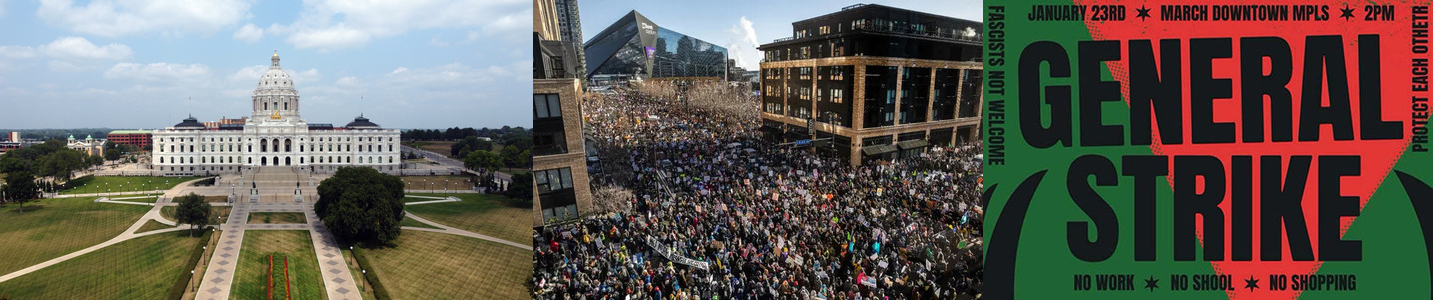
The Minneapolis protests demonstrate both the potential and the seeds of something larger. The ICE Watch networks that have emerged, with their decentralized structure, rapid communication systems, and capacity to move people to specific locations at short notice, are exactly the kind of infrastructure that election protection will require. When federal agents attempt to intimidate voters, the same networks could get people safely to the polls, document intimidation tactics, and record voter misinformation campaigns. The organizing muscle being built now is the organizing muscle that will matter in November.
What you can do: Join organizations with real mobilization infrastructure. Indivisible has 2,500 local groups in 99% of congressional districts. Participate in current ICE Watch and protest activities to build relationships and muscle memory. Build local networks that can activate quickly. Develop communication systems that don’t depend on platforms the administration can control. Train in nonviolent discipline and de-escalation. Understand that this organizing is not separate from election protection; it is election protection.
3. Economic Leverage
Autocracy is not good for business in the long run. Russian oligarchs who thought they were partners with the regime have found themselves in prison. Property rights become arbitrary; contracts depend on political favor rather than law. American businesses have a shared interest in constitutional democracy. But they face a prisoner’s dilemma: any single business that acts alone faces retaliation, so the rational choice is compliance, even though collective action would serve everyone’s interest.
Coordination solves this problem. When businesses commit together, publicly, none is exposed alone. This is why convening matters: it’s not asking businesses to be heroic, it’s helping them solve a collective action problem in their own interest.
Economic leverage is the least understood and potentially most powerful tool. If interference with elections triggers coordinated work stoppages across sectors, business closures at scale, consumer boycotts of companies that cooperate, capital flight and market disruption, and international economic consequences, then the administration faces a calculation: is holding power worth economic collapse?
The “economic blackout” that preceded the January 23 march in Minneapolis, with businesses closing and workers staying home, was a demonstration of capacity. The same infrastructure that can affect a state economy for a day can affect the national economy for a week. The labor-business-faith coalition being built in Minnesota is nationally significant.
But scaling this is the hardest problem. Individual businesses that act face retaliation. When one hotel tried to refuse ICE agents, corporate headquarters reversed the decision within hours. Hilton’s stock dropped 2.5% after DHS posted about the alleged ban. The same prisoner’s dilemma applies to every business: act alone, and you absorb all the cost while competitors take the business.
The solution requires building coalition infrastructure that can secure public, binding commitments from multiple actors simultaneously. If all the major hotel chains committed together, none would be isolated. If unions across sectors committed to strike together in defense of elections, the economic cost of interference becomes unacceptable. If business associations, not just individual businesses, made public commitments, members would have cover.
This infrastructure does not exist at the scale needed. Building it is the work of the next nine months.
What you can do: If you’re in a union, push for explicit commitments to strike in defense of elections. If you’re a business owner, find others willing to make public commitments together. Work through business associations, chambers of commerce, and industry groups. Build relationships across the labor-business divide around shared commitment to democracy. The commitments need to be made now, publicly, so that everyone knows what will happen.
If you’re in academia, the stakes are equally high. Universities are being targeted precisely because they are bulwarks of democracy: they generate independent research, train critical thinkers, and provide institutional cover for dissent. The AAUP has called defending democracy “the defining challenge of our time” for higher education. Faculty unions at University of California and other institutions are building strike capacity that could be directed toward election defense. If you’re a faculty member, work through your union or faculty senate to build explicit commitments. If your president won’t speak out, faculty can speak collectively. If you’re an administrator, consider what Harvard did: refuse to capitulate, defend institutional autonomy, and recognize that early cooperation with authoritarian demands does not buy safety—it only delays and worsens the eventual confrontation. Build alliances beyond campus: with local businesses, unions, faith communities, and families who understand that when a university is attacked, everyone’s freedom is attacked. For more on what universities can do, see: The Convening Role of Universities and The Winter 2027 Commitment.
V. Building the Infrastructure
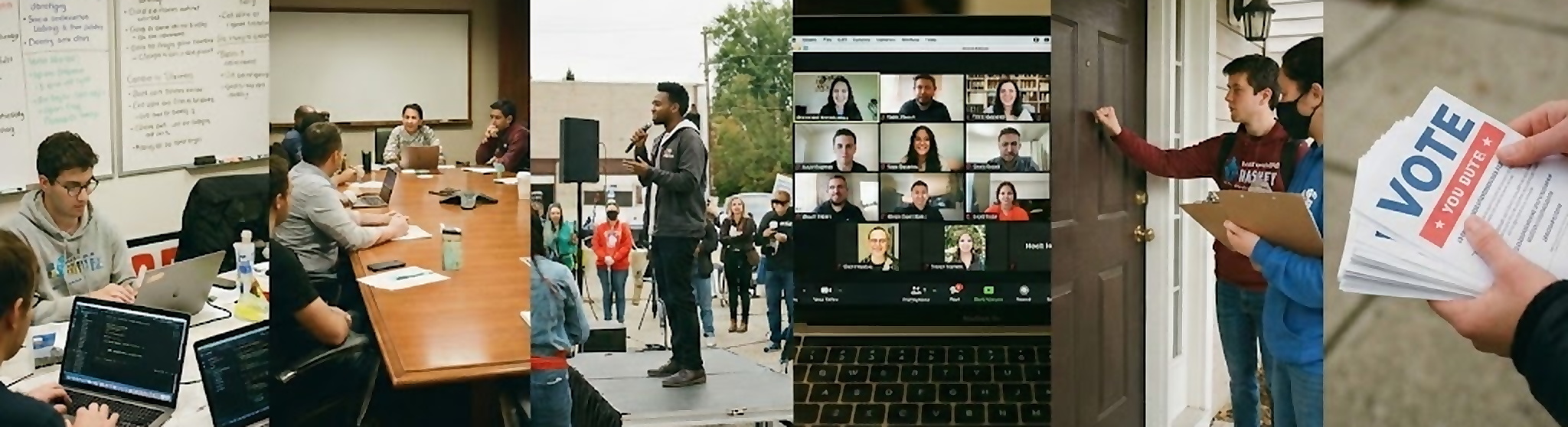
The three leverage points require infrastructure to activate. This infrastructure serves a specific purpose: it creates the conditions for defection. It provides cover for officials who want to refuse illegal orders. It coordinates businesses so none acts alone. It sustains pressure long enough to change calculations. Organizations exist that are building this infrastructure. Your task is to find them, join them, strengthen them.
For State Capacity
Protect Democracy combines litigation, policy advocacy, and technology to defend democratic institutions. Their legal teams are actively challenging administration overreach. Democracy Forward meets the administration in court. The Brennan Center for Justice provides research and legal support for election officials. State-level organizations vary; find yours.
For Mass Mobilization
Indivisible has the largest distributed organizing infrastructure in the country: 2,500 local groups, 99% congressional district coverage, weekly coordination calls, rapid response capacity. Their Guide provides tactical guidance for operating under authoritarian conditions. Common Cause co-leads the Election Protection network. The Election Protection Hotline (866-OUR-VOTE) deploys thousands of trained volunteers.
The ICE Watch networks emerging in Minneapolis and other cities represent something new: decentralized, neighborhood-based rapid response capacity. States at the Core has been training thousands in community defense tactics. These networks need to be built in every city, and their organizers need to understand that the same infrastructure will be needed for election protection.
For Economic Leverage
This is the least developed infrastructure and the most needed. Union locals are the foundation. If you’re a member, the work is internal organizing for explicit election-defense commitments. Business coalitions are emerging but informal. Faith communities have moral authority and economic reach. The Minnesota model, with its labor-business-faith coalition, needs to be replicated nationally.
The hardest work is stitching these together: creating organizations where businesses, unions, and faith communities can make binding commitments to collective action. No single business can act alone. But if the commitment is collective, public, and credible, it changes the calculation.
For Technical Infrastructure
All three leverage points require technical capacity: secure communications, rapid coordination, voter protection tools, data analysis, disinformation monitoring. If you work in technology, your skills are desperately needed. Tech for Campaigns matches skilled volunteers with campaigns. Ragtag connects technologists with progressive organizations. Higher Ground Labs coordinates investment in progressive tech infrastructure. And if you want to add your voice to those pressuring tech leadership to act, sign the ICEout.tech declaration.
VI. Nine Months
The goal is not to resist everything, but to defend constitutional processes. Build capacity now; escalate when specific constitutional violations occur.
Here is what you can do in the next nine months:
This week: Identify which leverage point matches your position. If you have connections to state government, start there. If you’re in a union or own a business, start building economic commitments. If neither, join a local Indivisible chapter or equivalent, or find your local ICE Watch network. If you have technical skills, sign up at Tech for Campaigns or Ragtag. Call your senators about ICE funding, not because it will pass, but because it builds the habit and the record.
This month: Attend a local meeting. Make a recurring donation to organizations building infrastructure. Identify three friends who are not yet engaged and bring them in. If you’re in a union, raise the question of election-defense commitments. If you’re a business owner, find others willing to make public commitments.
By spring: Have a regular role in an organization. Know who runs your local and state election apparatus. Have a communication plan that doesn’t depend on platforms the administration controls. If you’re building economic leverage, have explicit commitments from at least a dozen allies.
By summer: Be trained in election protection. Be part of poll worker recruitment in your area. Have relationships with people in each of the three leverage areas. Know the rapid response plan if results are contested.
By fall: Have a specific role in the election. Know what you will do if interference occurs. Be prepared to sustain engagement through January. Have already made the commitments, to show up, to strike, to close, to act, that create the costs that matter.
The honest truth is that success is not guaranteed. The variables include: Will state officials actually hold, or will they capitulate under federal pressure? Will courts issue injunctions and will anyone enforce them? Will mass mobilization be sustained over weeks, or will it dissipate? Will strikes impose enough economic cost to matter? Will any Republican officials defect, or will party discipline hold? Will the military refuse illegal orders, or will it comply?
None of these can be known in advance. But each depends on defection, and defection depends on the infrastructure that exists. State officials are more likely to break from party pressure if they see others breaking. Mobilization is more likely to be sustained if organizations exist to sustain it. Economic leverage is more likely to matter if commitments are made in advance, publicly, so that everyone knows what will happen.
The majority of Americans oppose what is happening. The question is whether that majority can be organized into collective action that creates political facts. That’s not guaranteed. But it’s possible. And the work of making it possible is the work that matters now.
We are not alone. We have power, if we organize it. The question is whether we will build the infrastructure in time.
Resources
Research
- Chenoweth, E. & Stephan, M. (2011). Why Civil Resistance Works: The Strategic Logic of Nonviolent Conflict. Columbia University Press.
- Chenoweth, E. (2020). “Questions, Answers, and Some Cautionary Updates Regarding the 3.5% Rule.” Carr Center for Human Rights Policy, Harvard Kennedy School.
- Sharp, G. (1973). The Politics of Nonviolent Action. Porter Sargent Publishers.
- Sharp, G. (1993). From Dictatorship to Democracy. Albert Einstein Institution. (Free PDF available)
- Brennan Center for Justice. (2026). “The Trump Administration’s Campaign to Undermine the Next Election.”
- Brennan Center for Justice. (2024). “Project 2025 Would Fuel the Assault on Election Officials.”
Organizations
- Indivisible
- Protect Democracy
- Democracy Forward
- Brennan Center for Justice
- Common Cause Election Protection
- Tech for Campaigns
- Ragtag
- Higher Ground Labs
- ICEout.tech — Tech worker declaration
- Election Protection Hotline: 866-OUR-VOTE (866-687-8683)
Contribute to This Document
This is a living document. If you can improve it — with better suggestions for concrete action, links to high-quality resources, or ideas for building organizational infrastructure — please contribute. Pull requests welcome on GitHub.